Ike MacKay |
Ike MacKay |
Ike MacKay |
Ike MacKay |
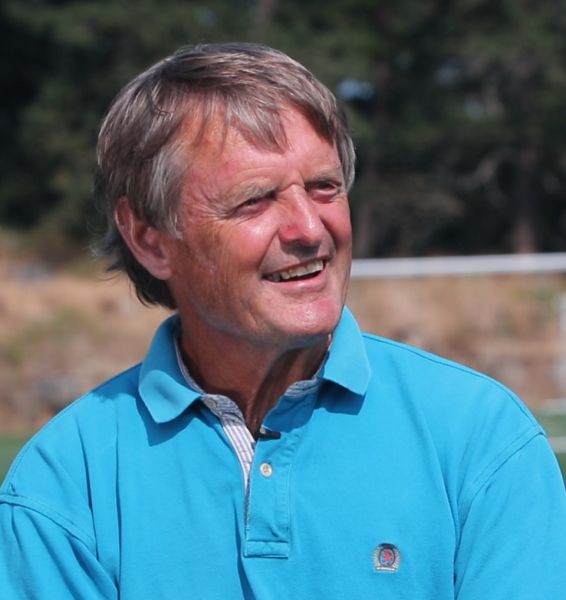

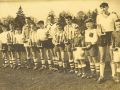
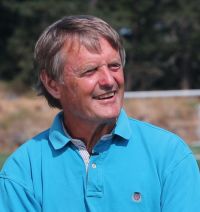
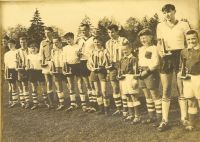
From Gabriola Island to Northern Ireland, Ike’s soccer journey covered many miles. The first three years of his life were spent on Gabriola Island and from three to twenty-three, he lived in Victoria. It was there that he had to choose between soccer and hockey. "I really liked hockey," he says, "but we could only train twice a week for one hour. There were only two arenas in Victoria at that time.”
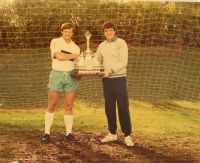
Hockey's loss was soccer's gain, and in grade 11 his Oak Bay team won the BC championship. The next year he played for Victoria United. In his second year with Victoria United (the Victoria O’Keefes) he won the Kennedy Cup, which was made up of two teams from California, one team from BC and the Mexican National team. At 17 he was selected for the BC-U21 team that won the Canadian championship. Ike would win two more with Vic West, when he was 33 and 36 years old. At 18 he played for Canada in the Olympic preliminaries and Pan American Games.
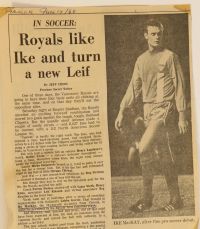
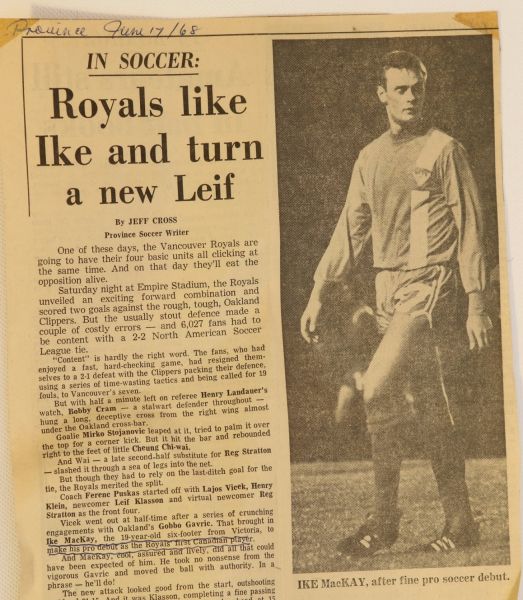
The following summer he signed a professional contract with the Vancouver Royals of the North American Soccer League. One of the most talented players in Canadian soccer history, Ike's career was unique in that he accomplished it in an era when a soccer career was measured by a players’ success in the Greater Victoria Soccer League or the Pacific Coast Soccer League. Instead, Ike broke barriers by travelling to Europe to compete in the Northern Ireland Football League after three years of university.
He returned and finished a Bachelor's degree at UVIC and was player coach in his last year. He then completed an MA in physical education at the University of Alberta, winning the Canadian University Soccer Championship. From 1976 to 1978, Ike played for the Portland Timbers of the NASL, which was interspersed with bouts on Canada’s World Cup team.
"There were no training camps for weeks on end. We got together a week before the tournament and that was about it." Qualifying for the World Cup was difficult because Canada always had to beat Mexico whose home game was at high altitude with very polluted air.
Ike moved back to Gabriola in 1975 and taught physical education in Nanaimo for 17 years. It was there that the game of Futsal (five vs. five indoor soccer) caught his eye and he went on to coach both the men's and women's national teams.
SPONSORED BY VANCOUVER ISLAND SOCCER
From Gabriola Island to Northern Ireland, Ike’s soccer journey covered many miles. The first three years of his life were spent on Gabriola Island and from three to twenty-three, he lived in Victoria. It was there that he had to choose between soccer and hockey. "I really liked hockey," he says, "but we could only train twice a week for one hour. There were only two arenas in Victoria at that time.”
Hockey's loss was soccer's gain, and in grade 11 his Oak Bay team won the BC championship. The next year he played for Victoria United. In his second year with Victoria United (the Victoria O’Keefes) he won the Kennedy Cup, which was made up of two teams from California, one team from BC and the Mexican National team. At 17 he was selected for the BC-U21 team that won the Canadian championship. Ike would win two more with Vic West, when he was 33 and 36 years old. At 18 he played for Canada in the Olympic preliminaries and Pan American Games.
The following summer he signed a professional contract with the Vancouver Royals of the North American Soccer League. One of the most talented players in Canadian soccer history, Ike's career was unique in that he accomplished it in an era when a soccer career was measured by a players’ success in the Greater Victoria Soccer League or the Pacific Coast Soccer League. Instead, Ike broke barriers by travelling to Europe to compete in the Northern Ireland Football League after three years of university.
He returned and finished a Bachelor's degree at UVIC and was player coach in his last year. He then completed an MA in physical education at the University of Alberta, winning the Canadian University Soccer Championship. From 1976 to 1978, Ike played for the Portland Timbers of the NASL, which was interspersed with bouts on Canada’s World Cup team.
"There were no training camps for weeks on end. We got together a week before the tournament and that was about it." Qualifying for the World Cup was difficult because Canada always had to beat Mexico whose home game was at high altitude with very polluted air.
Ike moved back to Gabriola in 1975 and taught physical education in Nanaimo for 17 years. It was there that the game of Futsal (five vs. five indoor soccer) caught his eye and he went on to coach both the men's and women's national teams.
SPONSORED BY VANCOUVER ISLAND SOCCER
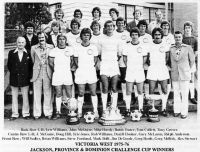
75 / 76 Canadian Champions!! |
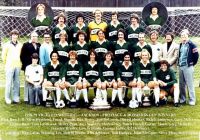
78 / 79 Vic West Soccer Team |
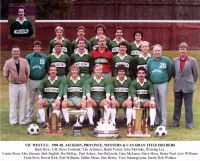
81 / 82 Vic West Soccer Team |
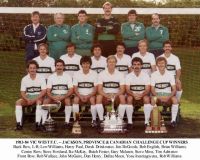
83 / 84 Vic West Soccer Team |
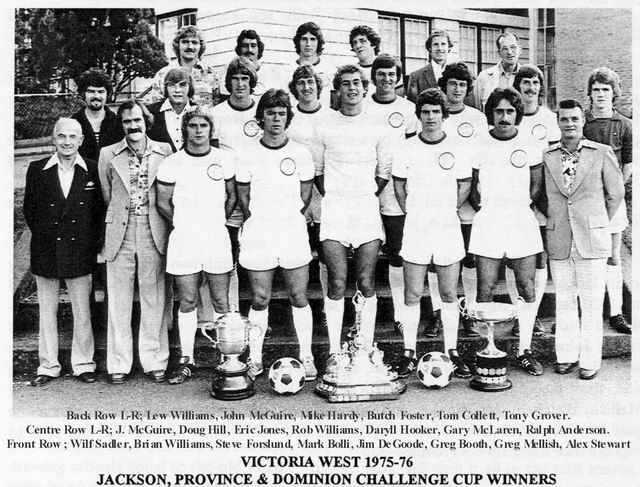
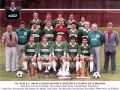
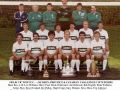
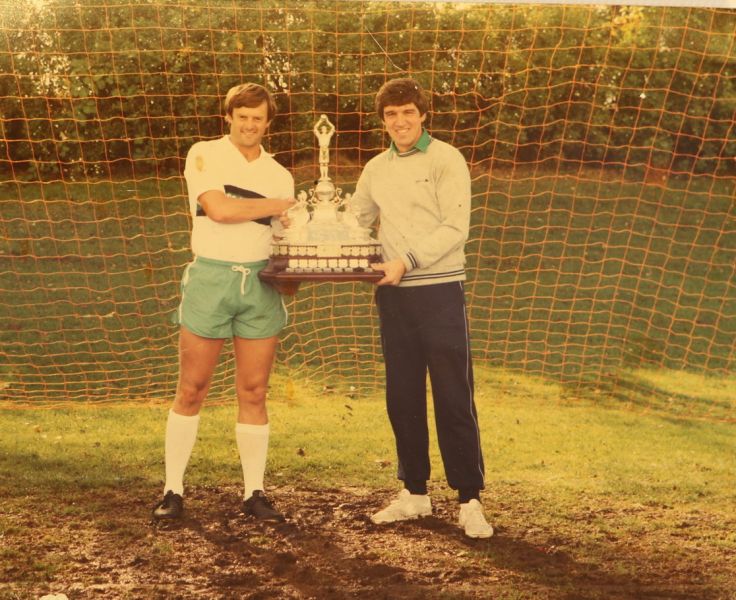
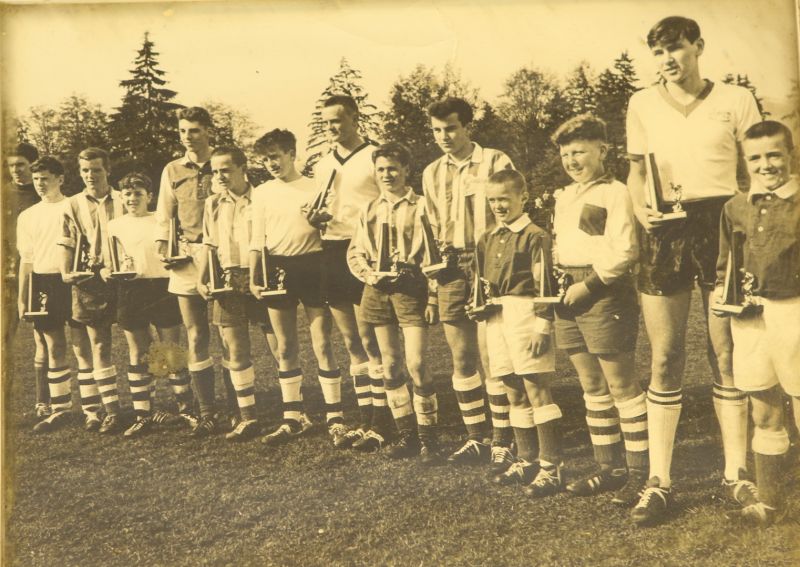
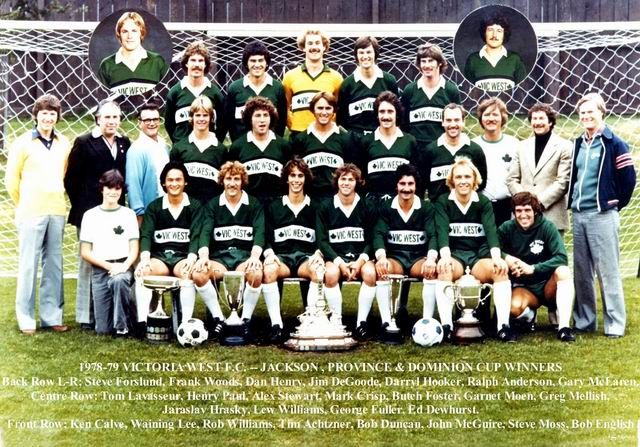
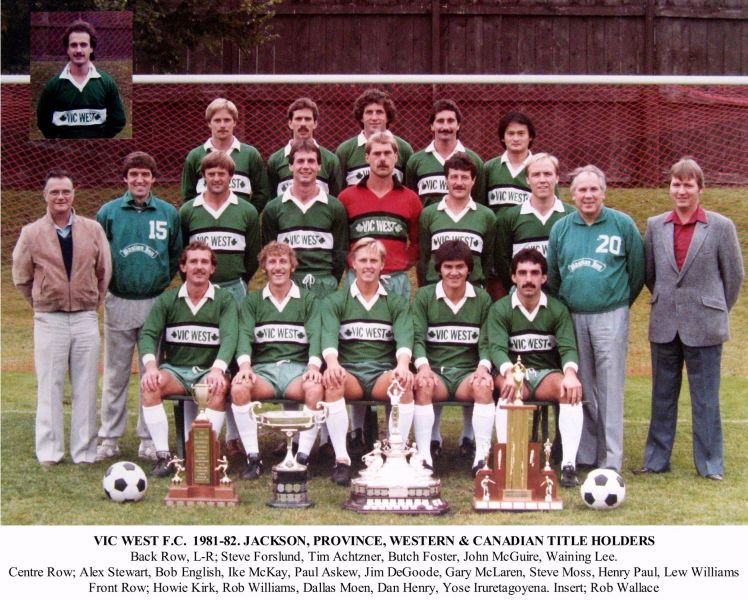
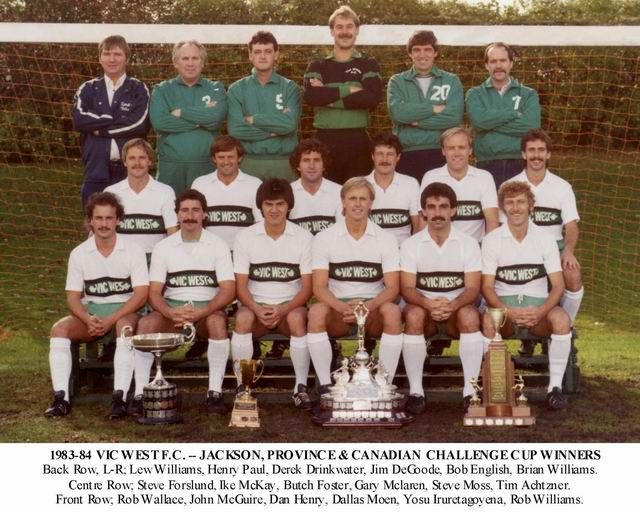
From 1976 to 1984, the Victoria West Soccer Club compiled a Canadian soccer record unequaled by any other club in the nation. At the start of their eighth decade, Vic West assembled a team of good young players that came up through the local minor soccer system, and during that glorious run, they won six BC and four Canadian championships!
By the 1974 season, the Vancouver Island Soccer League had expanded to 40 teams and the league had gained some credibility. Columnist Max Low confirmed that two years after the new alignment, the game was booming and drawing crowds equal to the old Pacific Coast Soccer League. Vic West's coach, George Paul, recruited an entire gang of young Victoria talent including Steve Forslund, Butch Foster, Gary McLaren, Jim De Goode, John McGuire, Rob Williams, and Steve Moss who played together throughout the West's greatest decade. In 1976, Vic Wests won their 16th historic Jackson Cup, and as Vancouver Island Soccer League champions, they went on to defeat the Italia Canadian side to become only the second Victoria club to engrave their name on the Province Cup. The team, coached by Doug Hill, made plans for Winnipeg and the Canadian finals where they beat Fort Rouge in a come -from-behind victory to win the Dominion Challenge Cup.
Vic Wests would do it all again in the 1978-79 season. With Bob English as coach, they beat UVic for the Jackson Cup, trounced Vancouver Croatia for the Province Cup, and then went on to score their second Dominion Challenge Cup by defeating the La Salle Olympiques.
The 1980-81 season saw the Wests defeat the Surrey Firefighters in the Provincial finals for yet another BC crown but they lost to Calgary in a penalty shoot-out after overtime. Their plans for the threepete were dashed.
The next season would be different as Lady Luck smiled on the Wests in their nail-biting defeat of Vancouver Croatia for a fourth BC title. The team went on to beat Winnipeg and Calgary in the Western finals, and then enjoyed a character-building match where they scored four times on Saskatoon United in a howling wind and atrocious field conditions for a third Canadian title.
Butch Foster was the 1983-84 playing coach when they defeated Kamloops for a sixth Province Cup. Victoria hosted the Canadian finals when the Wests won their fourth Canadian title in eight unbelievable seasons -- 1976, 1979, 1983 and 1984. Included in the Vic West's astonishing run were four straight BC titles -- the only team to hold that distinction in the history of the Province Cup, and as the dominant amateur soccer team in Canada, the Wests did it with an unparalleled commitment to teamwork.
SPONSORED BY VICTORIA WEST ATHLETIC ASSOCIATION
Search For an Inductee
Others In Category
- (1976 - 1984) Vic West Soccer Teams (2013)
- 1896-1996 Vic West Athletic Association (1998)
- 1951 Victoria All-Star Soccer Team (2001)
- 1975 London Boxing Club (2011)
- Bob Bolitho (2011)
- Brian Robinson (2008)
- George Pakos (2001)
- Ian Bridge (2003)
- Ike MacKay (2015)
- Jamie Ackinclose (2023)
- Jamie Lowery (2025)
- Simon Keith (2016)
- Victoria O'Keefe Soccer Club 1966-67 (2017)