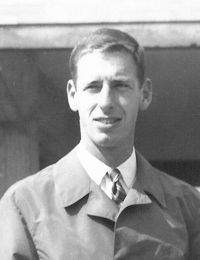
David Anderson |
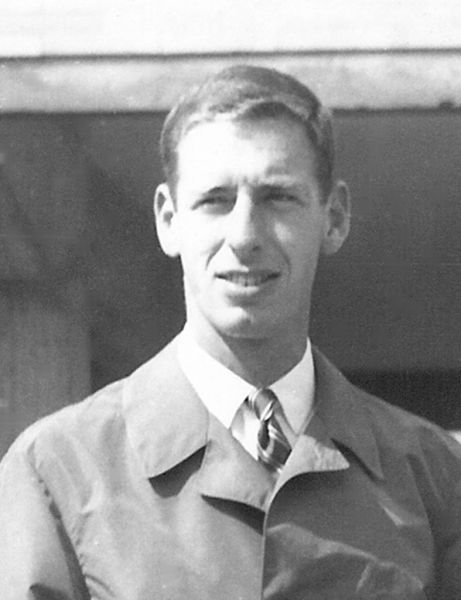
Long before his political career, David Anderson learned the value of teamwork, as a rower. Playing rugby first at Vic High, and then at Victoria College, he learned a lot about competition before heading to the University of British Columbia to continue his education. On arriving at UBC, he was quickly recruited to join the powerful Thunderbirds rowing team. Members of the UBC/Vancouver Rowing Club had just put on a stunning performance at the 1956 Olympics in Melbourne. In the men's fours race, they won Canada's first-ever rowing gold medal, plus a silver in the eights. David became a member of the Canadian eights crew at the 1959 Pan-American Games in Chicago, and promptly helped them bring home a silver medal. Although that medal effort alone wasn't enough to secure Anderson a seat in the scull for the 1960 Summer Olympics in Rome, he was sent along as a spare. When Canada was shut out of the medals up to the final days of competition, his friend, Lorne Loomer, was shifted to the men's pair's team. That gave Anderson position #2 in the eights boat, and from there, he helped Canada win its only medal of the Games -- a silver in a tight race with Germany. David's leadership skills prompted the UBC team to name him as their captain.
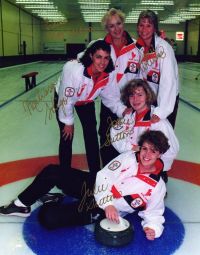
Julie Sutton rink |
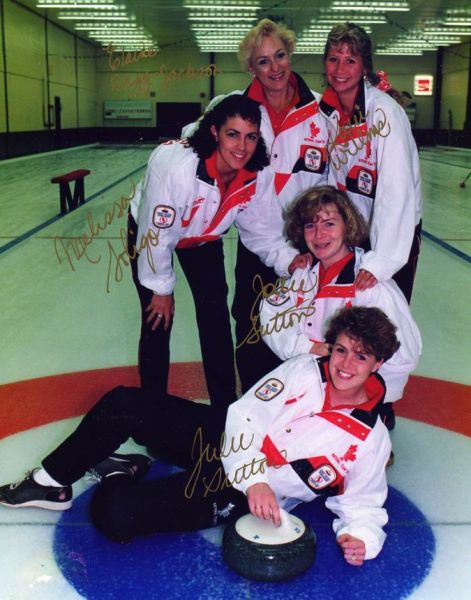
In the early 90's, five young Victoria women playing out of the Juan de Fuca Curling Club put themselves, and Canada, solidly on the world curling map. Twin sisters Jodie and Julie Sutton had first gained prominence as Canadian Jr. champs in 1986. In 1991, with Julie skipping, Jodie playing third, Melissa Soligo as second, Karrie Wilms as lead, and Elaine Dagg-Jackson as alternate. The team spent months working out, and it paid off; the Sutton rink won the '91 Canadian Championships, and then a month later at the Worlds, they brought home silver. Then it was on to the 1992 Winter Olympics in Albertville, France, where curling was a demonstration sport. They won the bronze, but their teamwork and determination helped persuade the IOC to add curling to the official sport roster starting with the '94 Olympics. Days later, despite being exhausted, the Sutton rink managed to win the silver medal at the 1992 Canadian Championships.